
Teams · Privacy and legal teams
Make the legal call once, then see it carried out
Privacy and legal teams read the DPDP Act and decide what it means for the business. TrustOS keeps each decision, and the reasoning behind it, attached to the purpose, notice or request it governs, so you can see whether the rest of the company acted on it.
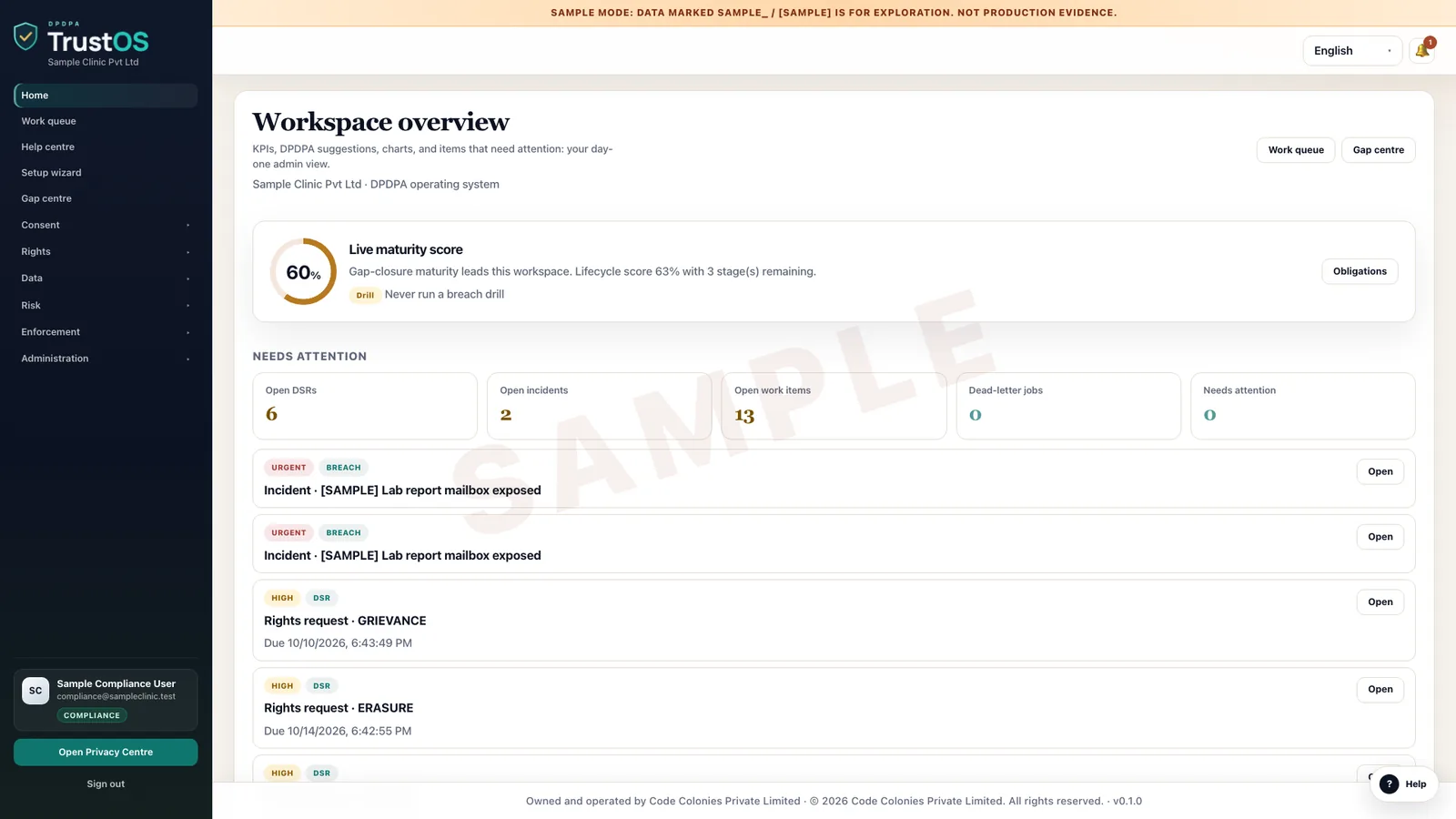
What worries this team
The questions that keep coming back

A purpose with no recorded ground
Marketing added a WhatsApp offers list to the D2C checkout last quarter. Nobody wrote down whether it rests on consent or a legitimate use, and the notice still describes the old flow. You find out when a customer complains.
Notices that drift from what systems do
The notice says loan application data is kept for a set period after closure. The collections vendor keeps call recordings with no end date. A notice is only as accurate as the least tidy system it describes.
Decisions that live in one inbox
Why did you decide a hospital could refuse to erase discharge summaries? The answer sits in an email thread from March. When the person who wrote it leaves, the reasoning leaves with them.
A week in TrustOS
What the work looks like
- Step 1Approve a notice before it goes liveProduct sends a revised notice for a new co-lending partner. You compare it with the current version, check each purpose against its recorded ground, and approve it. The language versions are queued for review from the same record.
- Step 2Decide an erasure request that is not simpleA parent asks an edtech platform to erase their child's account, but finance must keep fee invoices under tax law. You record what goes, what stays and why, and technology receives the erasure task with your note attached.
- Step 3Review a processor before renewalThe call centre that handles loan collections is up for renewal. You check its contract for security, breach reporting and deletion terms, log two gaps, and give procurement a task to fix them before signature.
- Step 4Answer a grievance with the factsA customer says they withdrew marketing consent and still got SMS offers. You see when the withdrawal was recorded, which systems received it and which did not, and reply with what happened and what has been fixed.
Modules
Where this team spends its time
- Purposes and noticesDecide why you process each kind of data, then tell people in their own language.Usually leads
- ConsentRecord each consent against the notice shown, and act on withdrawal in every system.Usually leads
- Rights and grievancesEvery request and complaint in one queue, with owners, due dates and a reply on file.Works in it
- Processors and assessmentsKnow which vendors handle your personal data, on what terms, and what could go wrong.Usually leads
- Evidence and auditAnswer an auditor's question with the record, in minutes.Works in it
The roles in this team: Privacy manager or privacy office, Legal counsel. All roles
Questions
Asked by teams like yours
Does TrustOS give legal advice?
No. It records the decisions your lawyers make and tracks the work that follows from them. Interpreting the DPDP Act and the DPDP Rules for your business stays with your legal team or external counsel.
Can we start with the notices and consent text we already have?
Yes. You load your current notices as the first version and link each one to its purposes. From then on, every revision is kept with who approved it and when.
Can legal sign-off be a required step on some requests?
Yes. You can require legal review for chosen request types, such as erasure of health records or access requests that include information about other people. The request waits for your decision and keeps your reasoning with it.
See it with your data
Show us where your personal data lives. We will show you TrustOS running on it.
A 30 minute walkthrough on Google Meet with someone who knows the Act and the product. You leave with a view of your first phase, the owners and the effort.
Or get a rollout proposal in two minutes- Step 1A 30 minute demo on Google MeetWith someone who knows the Act and the product.
- Step 2Your systems and purposesWe walk one product's personal data through TrustOS.
- Step 3A first phase you can planModules, owners and effort, written down for you to keep.