
Guides
How teams run each duty.
Each guide starts with a situation an Indian organisation actually faces, explains what the Act asks in plain words, and shows how the work gets done.
Getting started2 guides
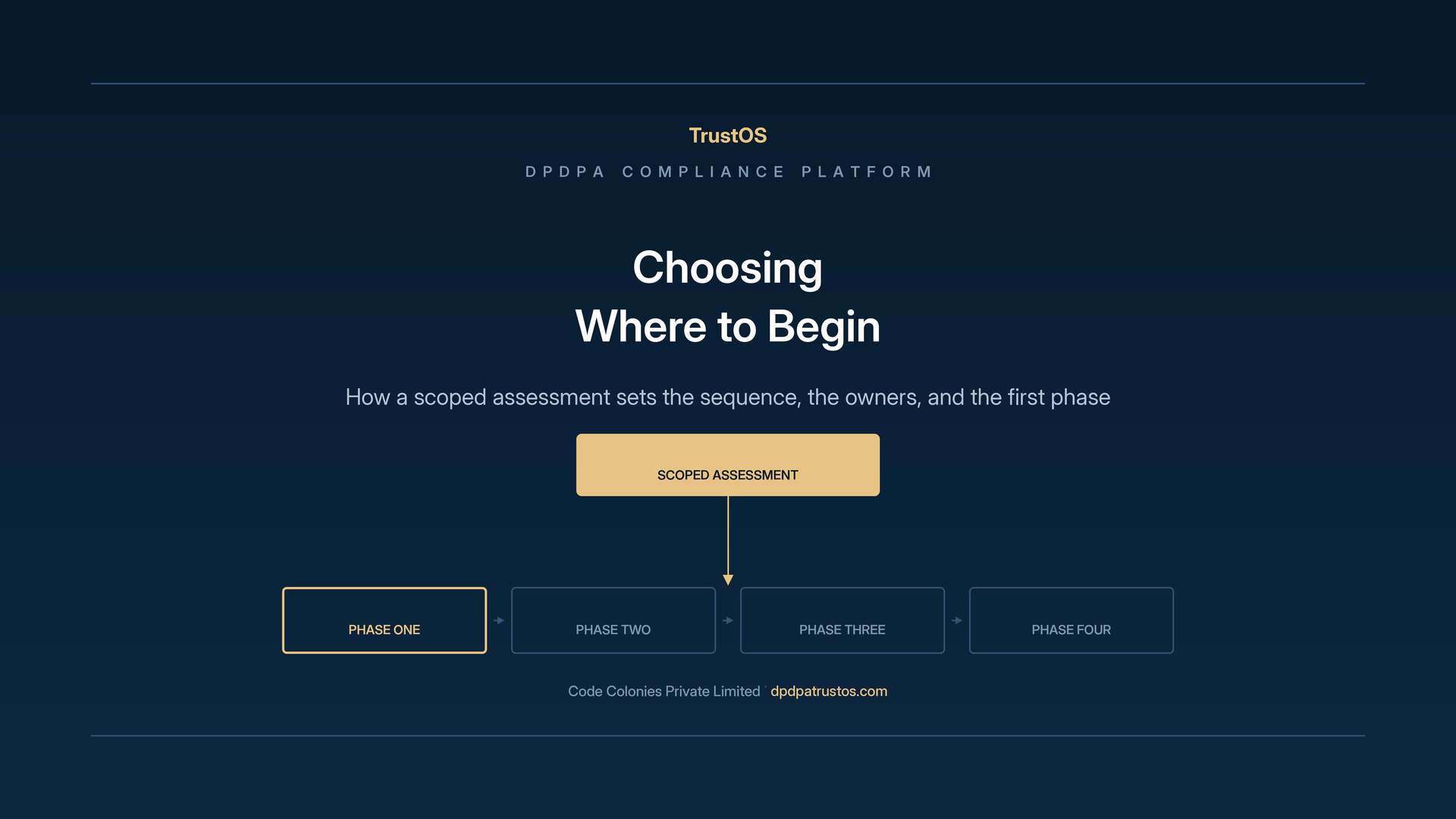
Choosing where to begin
Most DPDP programmes stall because the whole Act looks like one project. A short assessment tells you which area to start with, who owns it and what the first phase should leave behind.
12 min read
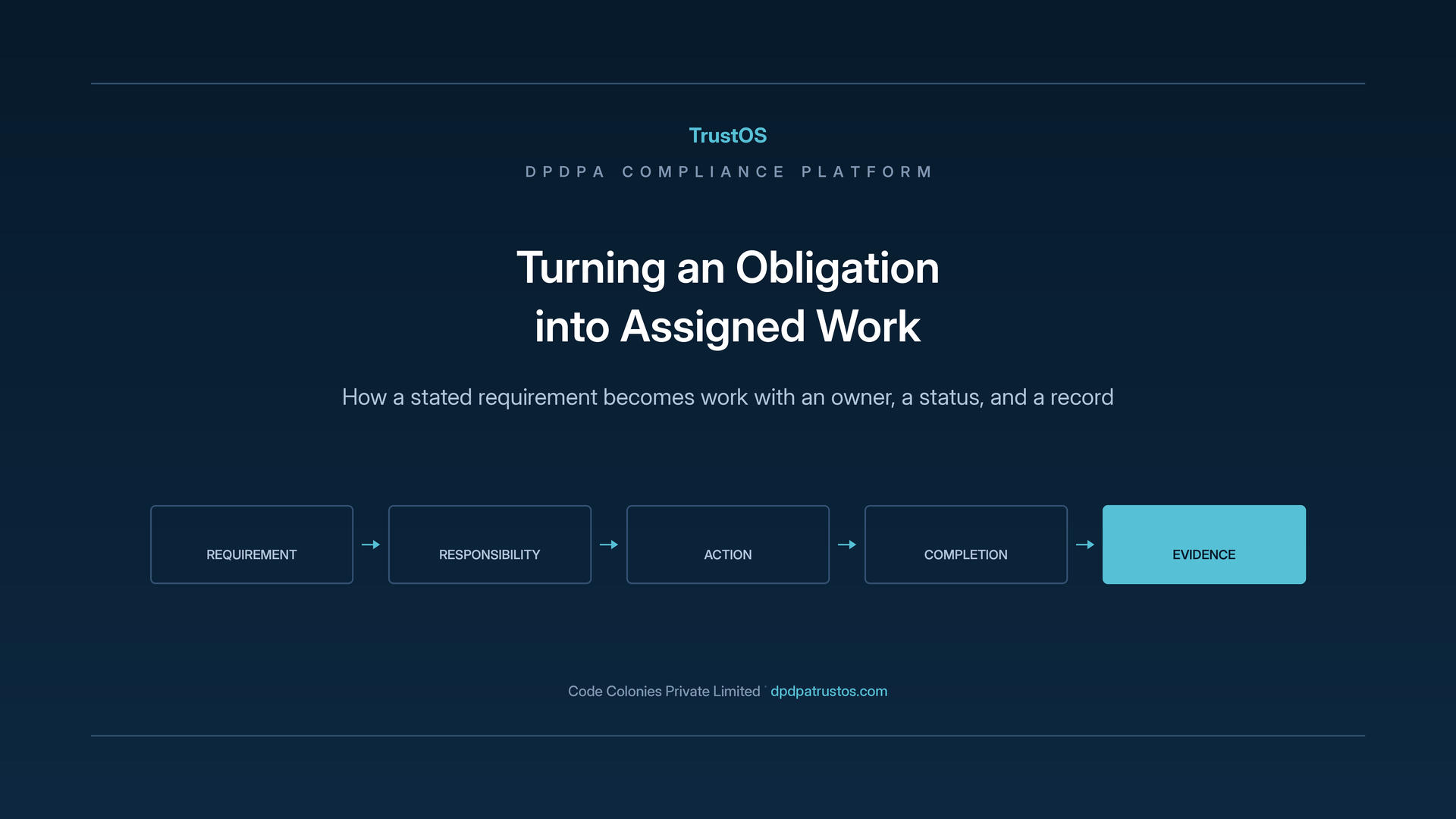
Turning an obligation into assigned work
A privacy policy says what you intend. It does not say who does the work, whether it is done, or how anyone would check. TrustOS moves each duty from requirement to responsibility, action and evidence.
14 min read
Deployment3 guides
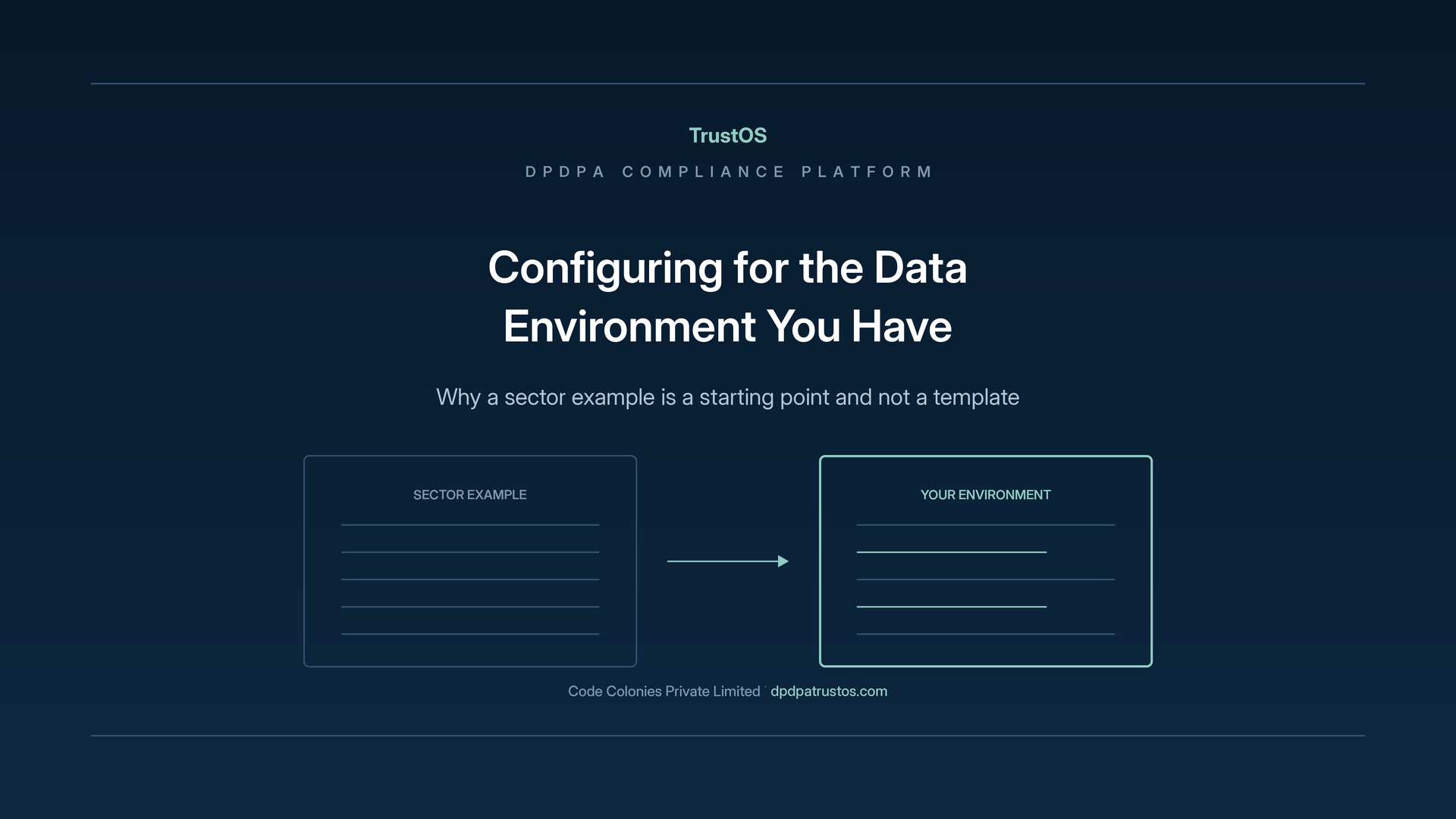
Configuring for the data environment you have
A sector example saves you from the blank page. It describes a typical organisation, and TrustOS earns its place once it uses your service names, your systems, your vendors and your owners.
11 min read
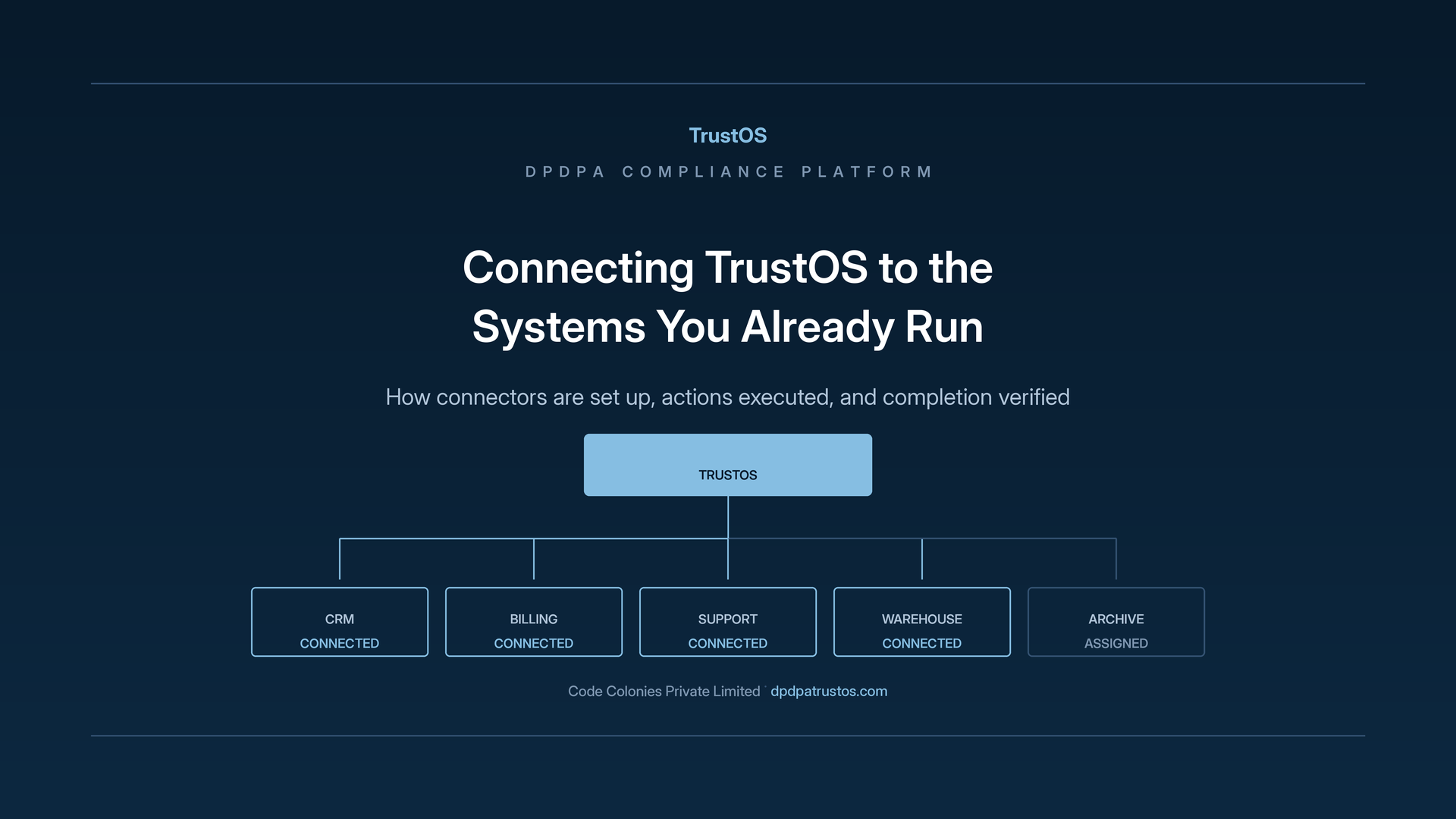
Connecting TrustOS to the systems you already run
An erasure that someone says they did is weaker evidence than one the system itself confirms. TrustOS connectors are scoped, approved and checked, and systems without a connector are still covered.
11 min read
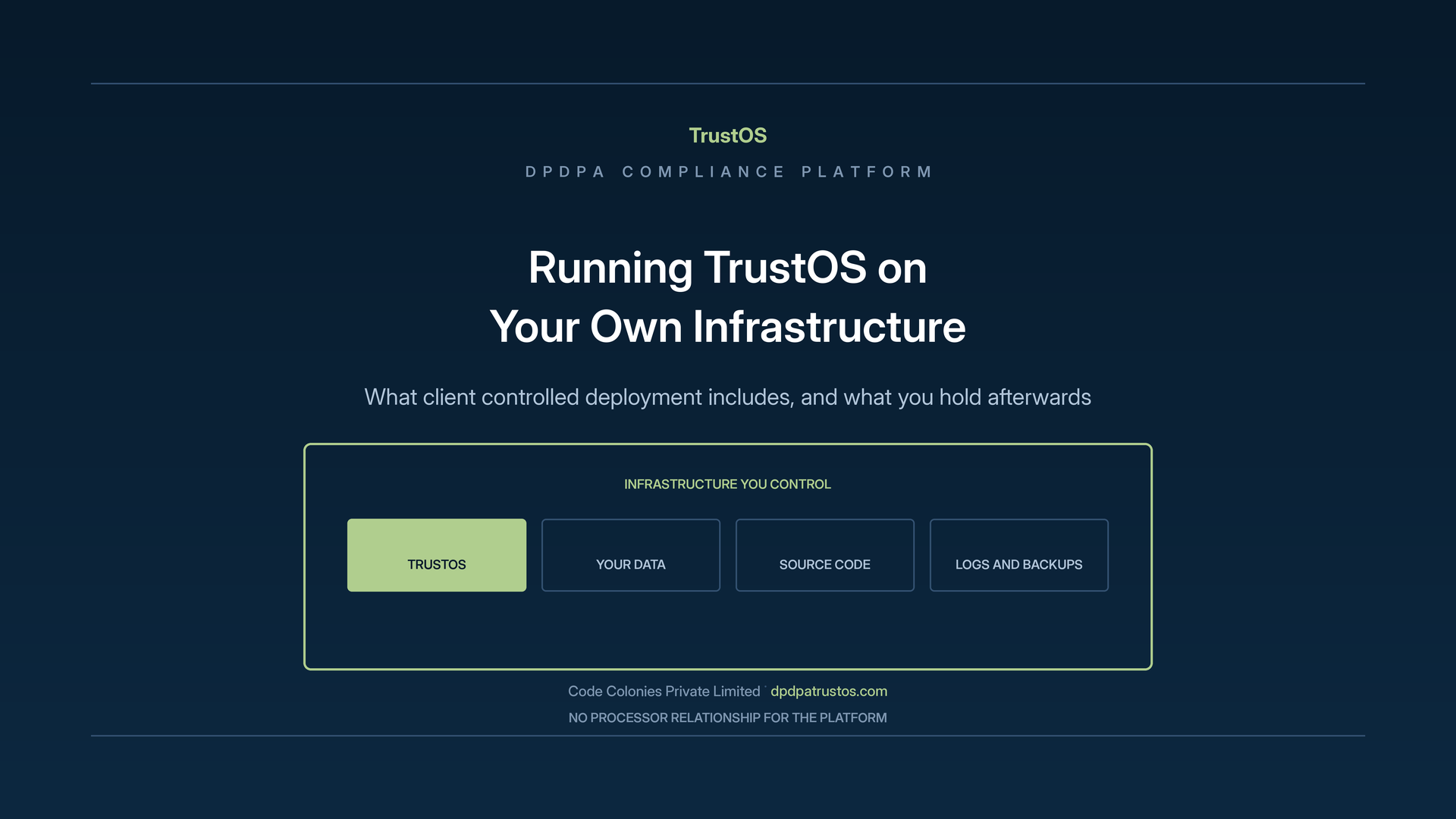
Running TrustOS on your own infrastructure
A compliance platform holds personal data, so where it runs is itself a compliance decision. Deploying TrustOS inside your own environment keeps the platform and its records under your control, and hosting remains the better choice for some organisations.
12 min read
Governance2 guides
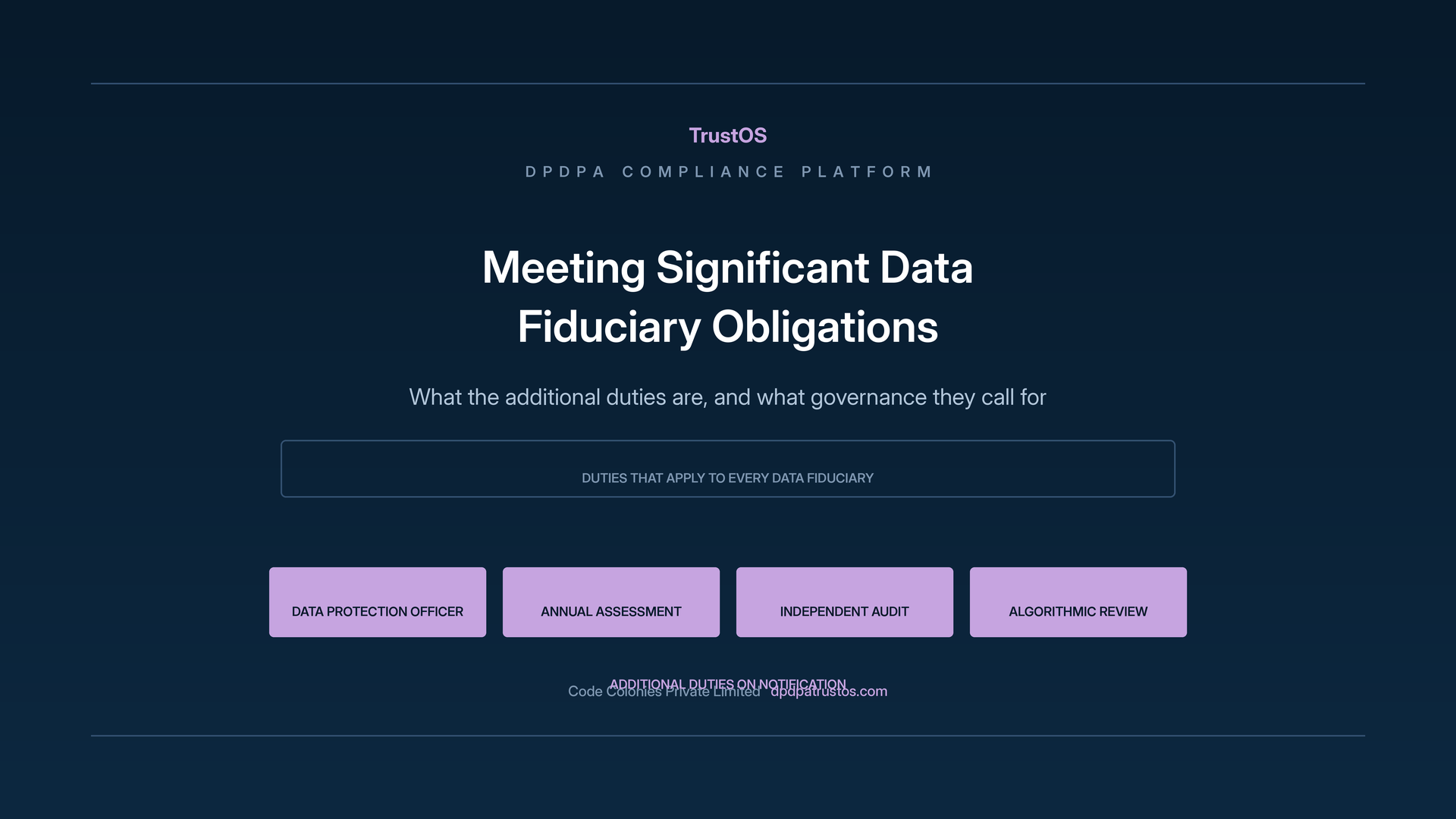
Meeting Significant Data Fiduciary obligations
A Significant Data Fiduciary needs a Data Protection Officer in India, an independent data auditor, yearly impact assessments and audits, and a review of its algorithmic software. Each duty takes time to set up, and the order of preparation matters.
10 min read
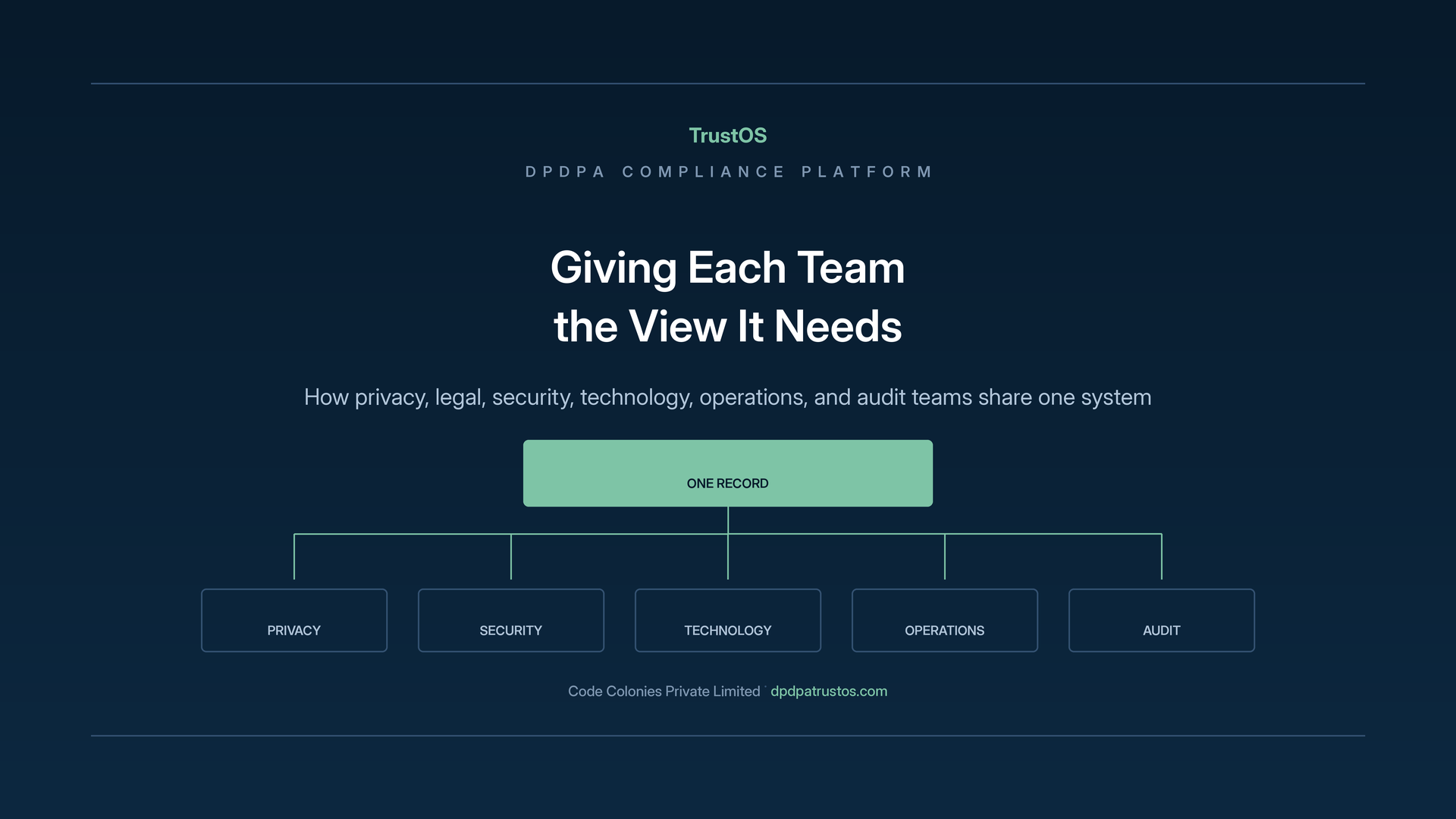
Giving each team the view it needs
No serious DPDP duty sits inside one department. TrustOS gives each team a view of the same underlying record, so handovers become assigned work and nobody has to reconcile three lists.
13 min read
Breach1 guide
Retention and erasure1 guide
Notice and consent2 guides
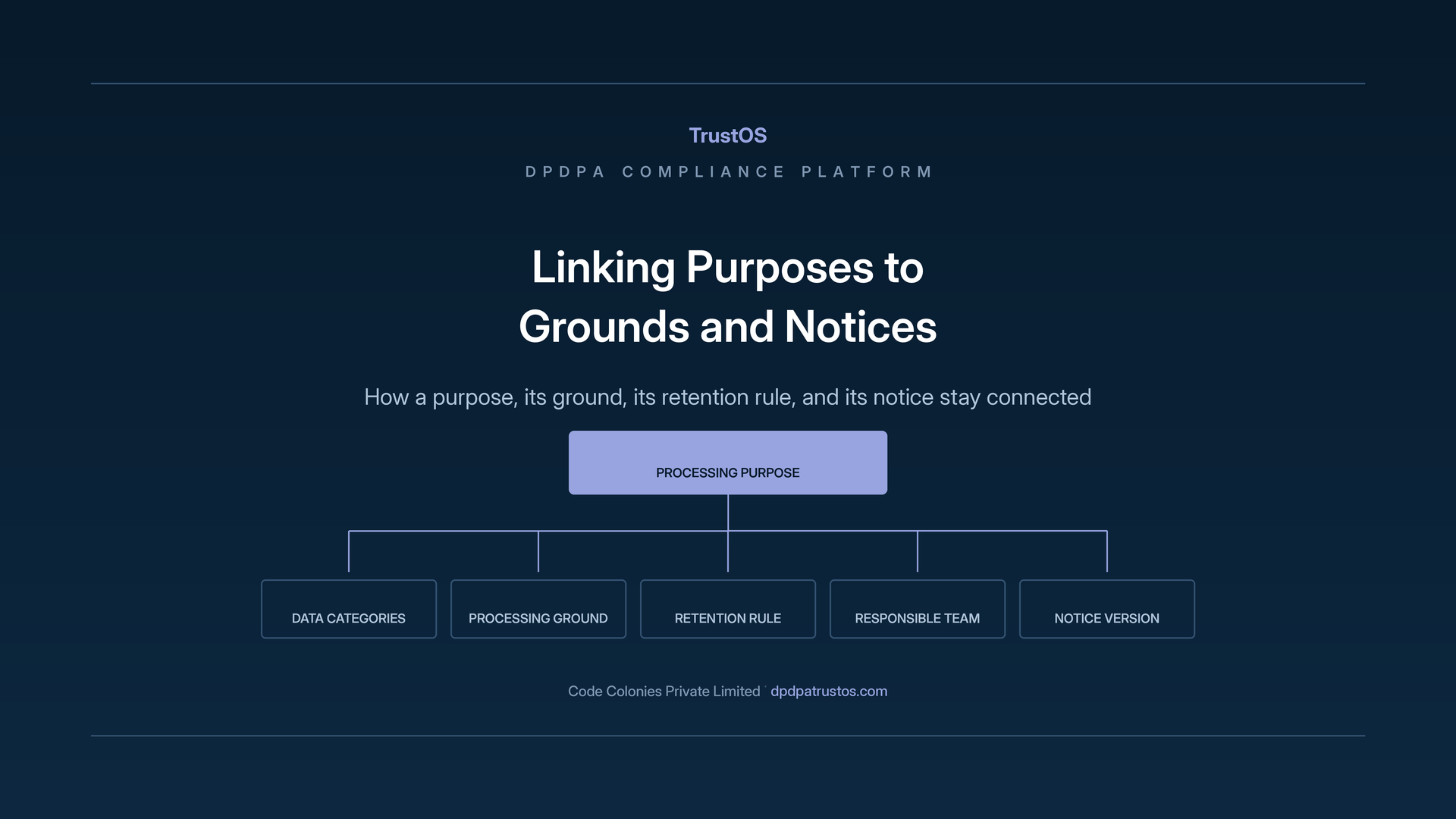
Linking purposes to grounds and notices
Under the DPDP Act almost everything follows from the purpose you process data for. A purpose register keeps the ground, the notice versions and the retention rule moving together.
12 min read
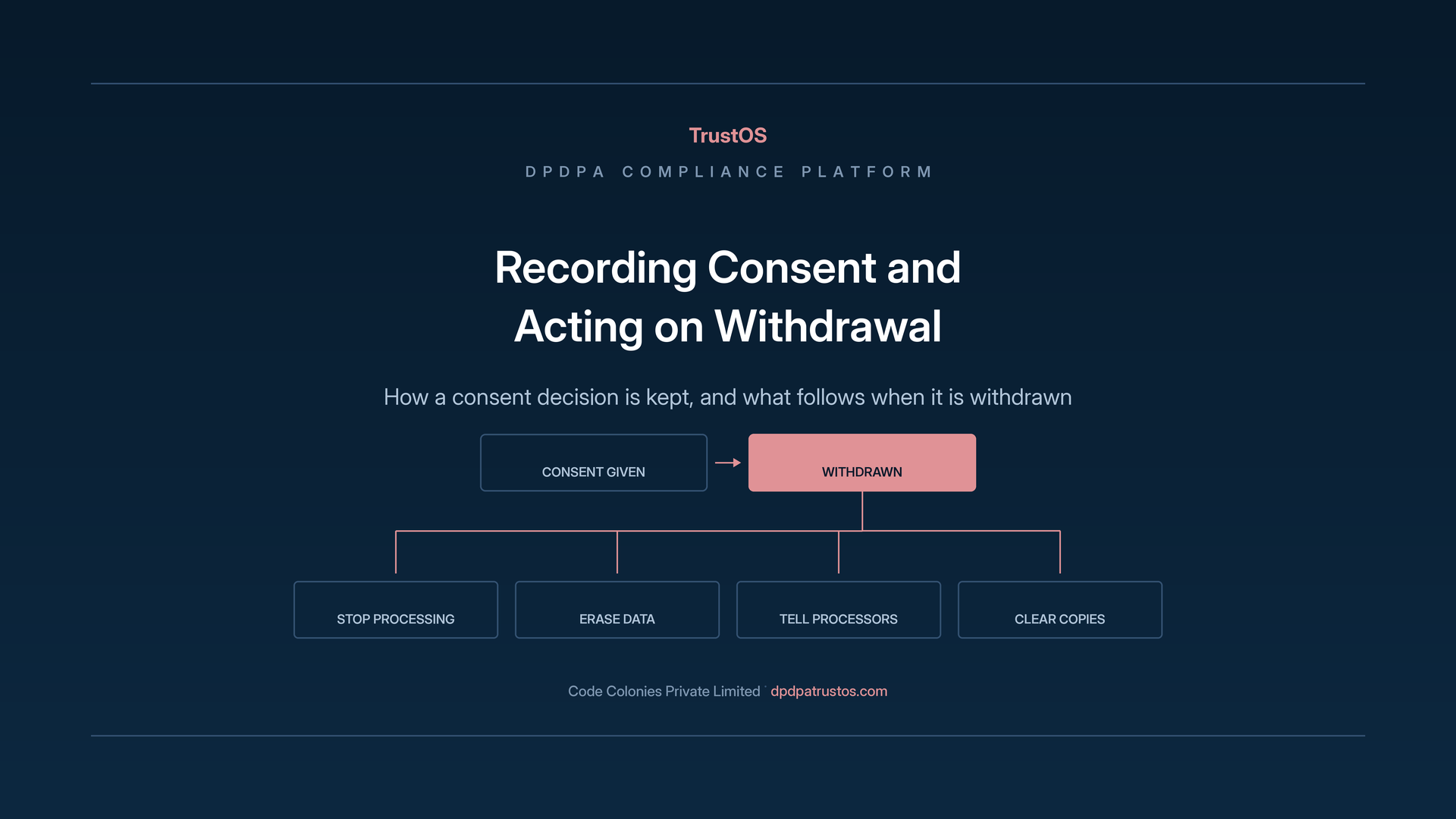
Recording consent and acting on withdrawal
A consent record is only useful if your systems read it. Capture the right details when someone agrees, make a withdrawal reach every system, and prepare for registered Consent Managers.
11 min read
Inventory1 guide
Evidence and audit1 guide
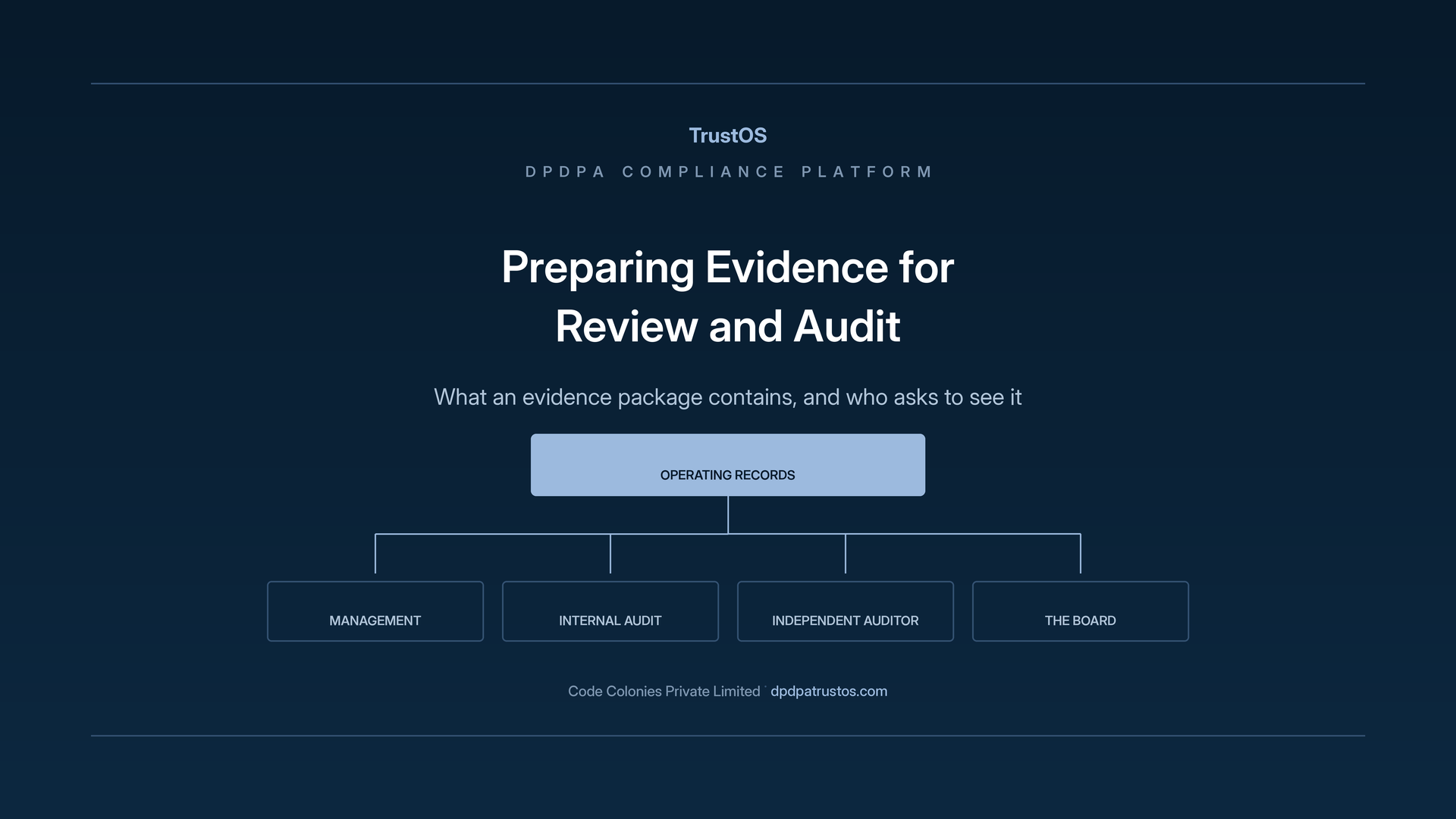
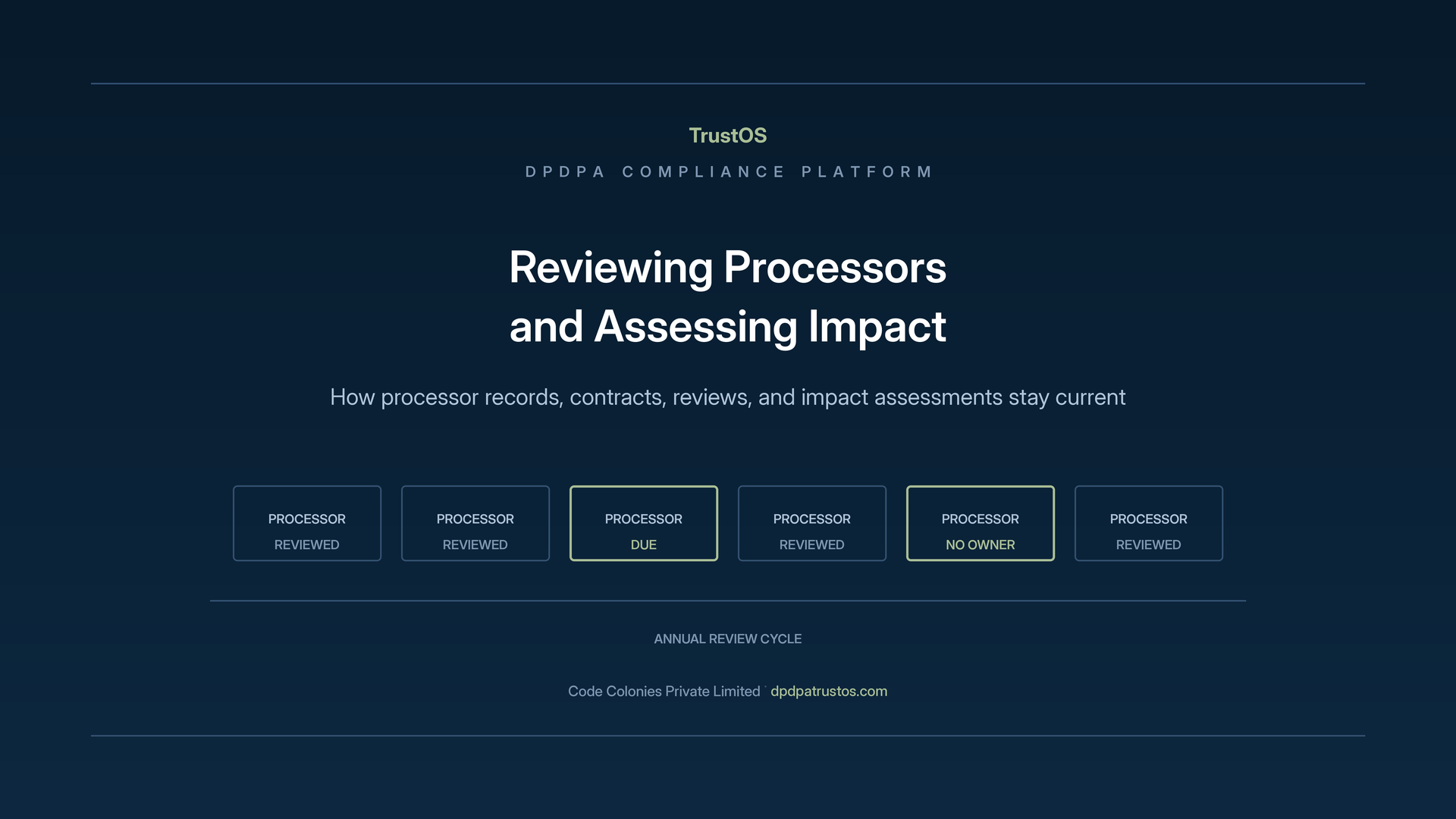
Processors1 guide
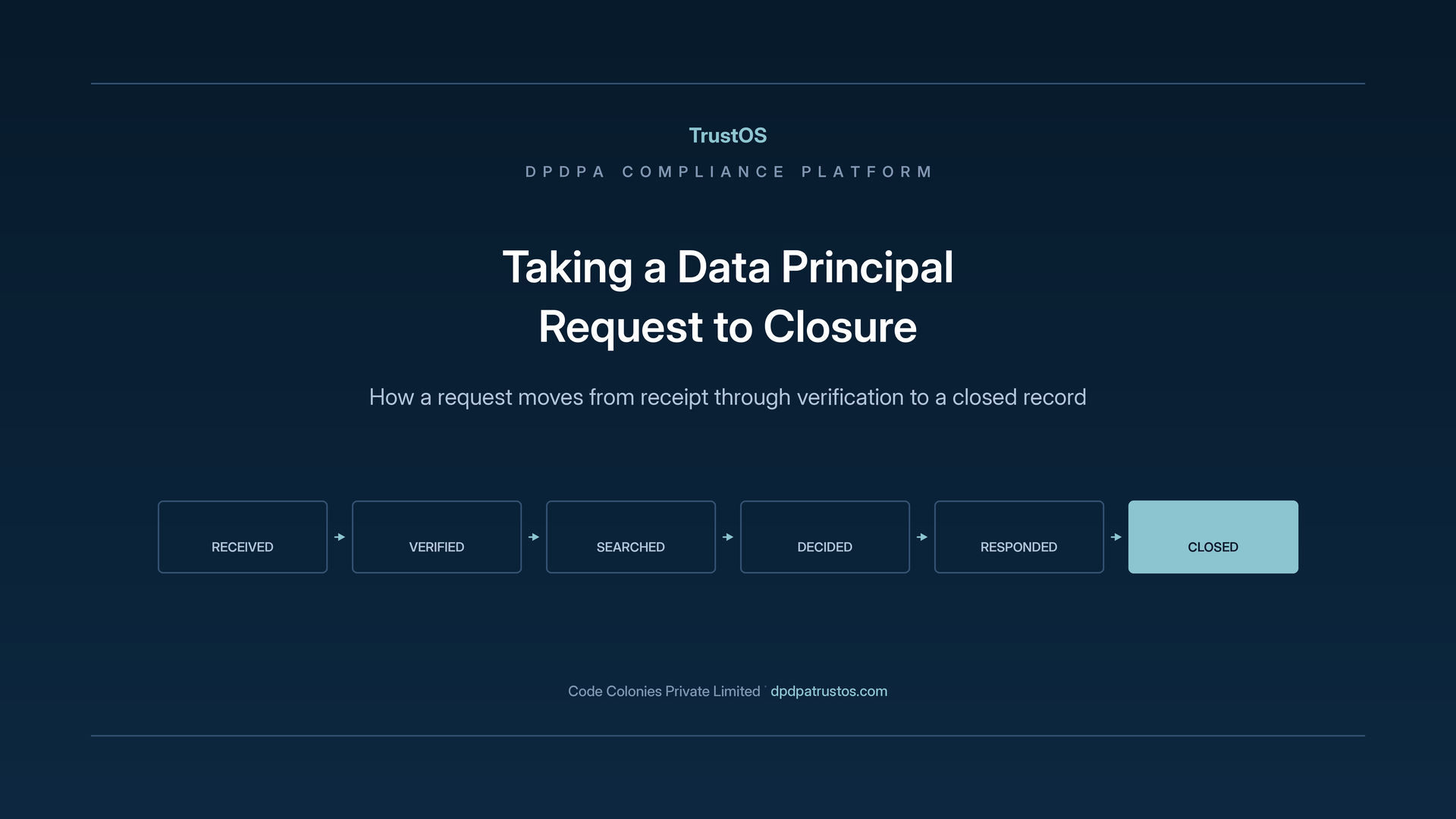
Rights and requests1 guide
See it with your data
Show us where your personal data lives. We will show you TrustOS running on it.
A 30 minute walkthrough on Google Meet with someone who knows the Act and the product. You leave with a view of your first phase, the owners and the effort.
Or get a rollout proposal in two minutes- Step 1A 30 minute demo on Google MeetWith someone who knows the Act and the product.
- Step 2Your systems and purposesWe walk one product's personal data through TrustOS.
- Step 3A first phase you can planModules, owners and effort, written down for you to keep.