
Industries · Fintech and payments
Products ship weekly. Your consent records need to keep up.
A payments or fintech app adds a feature most sprints: a new UPI flow, a buy now pay later option, an expense tracker that reads SMS. Each one can start collecting new data before anyone has written a purpose or updated the notice. Data also leaves for banks, partner lenders, KYC providers and analytics tools.

What you hold
The personal data in a typical week
The register every duty starts from. In TrustOS each category is linked to the systems that hold it, the purposes it serves and an owner.
Data register · Fintech and payments6 categories
- Phone numbers, UPI IDs and linked bank accounts
- Transaction history and merchant details
- KYC documents and video KYC recordings
- Device identifiers and app permissions
- SMS and contact data read by the app, where permitted
- Support chats and dispute records
Pressure points
Where the DPDP Act bites in fintech and payments
Features that outrun the notice
A product team adds a spend insights feature that reads transaction SMS. If the notice and consent text do not mention it, you have a purpose with no valid ground.
Many partners, unclear roles
A single payment might touch a sponsor bank, a payment aggregator, a lending partner and a KYC vendor. Who is the Data Fiduciary and who is the processor needs writing down for each flow.
Analytics and marketing SDKs
Third party SDKs in the app send device and behaviour data out. Each one is a processor relationship you should be able to describe and justify.
Requests at volume
A consumer app with a large user base can get many access and erasure requests a month. Handling them in a shared inbox does not scale and leaves no reliable record.
How TrustOS helps
The modules that matter most here
Add a purpose review to your release checklist so a new feature gets its purpose, ground and notice text approved before launch.
Keep a tamper evident record of each consent and withdrawal, linked to the notice version the user saw in the app.
Give app users one place to manage consent and raise requests, linked from the app's settings screen.
Find a user's data across the ledger, CRM and analytics stores, and confirm deletions where your retention rules allow.
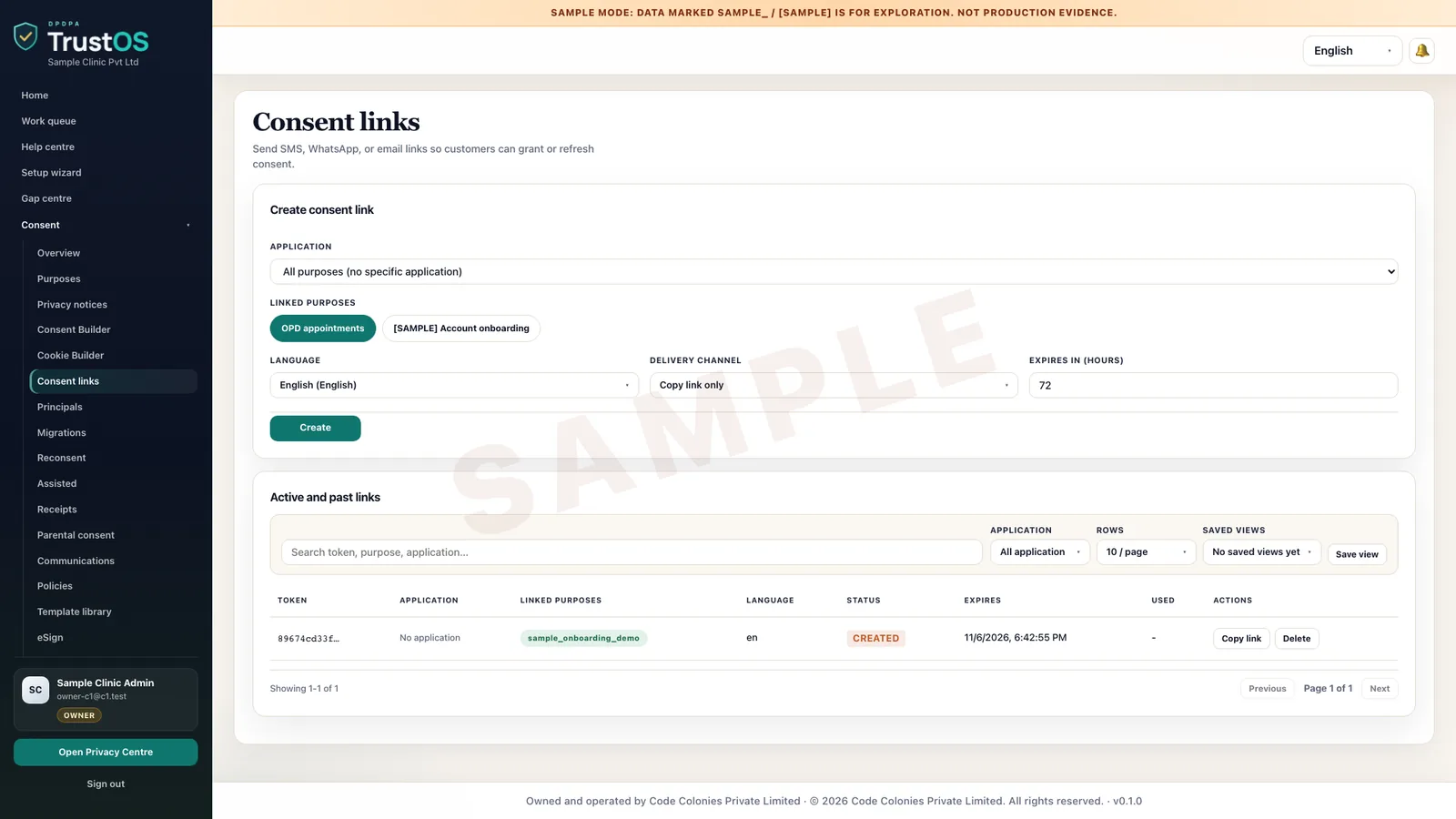
What it looks like in TrustOS · sample data
An example scenario
Illustrative example: a new SMS-reading feature
A product manager plans an expense tracker that reads bank SMS. In this hypothetical, the release ticket links to a purpose review in TrustOS. Legal approves the purpose, the notice gains a new line in English and Hindi, and the consent screen asks separately for SMS access. The feature ships with its records already in place.
Rules that sit alongside the Act
- RBI directions on payment aggregators
- RBI directions on storage of payment system data
- RBI directions on digital lending
- NPCI guidelines for UPI participants
TrustOS helps you keep these obligations in the same record. Your counsel decides how they apply to you.
Questions
From fintech and payments teams
We already follow RBI data localisation. Is that enough for the DPDP Act?
No. Localisation is about where payment data is stored. The DPDP Act is about why you hold personal data, what people were told, their rights and how long you keep it. The two sit side by side.
Can TrustOS connect to our own microservices?
Yes, through a documented interface or scoped database access. Your engineers decide which services are connected and what actions TrustOS may ask them to take.
Can we roll this out one product at a time?
Yes. Many teams start with the main app and its consent flows, then add other products and partners in later phases.
For fintech and payments teams
See TrustOS run on fintech and payments data
Bring the systems that hold your phone numbers, UPI IDs and linked bank accounts, and the requests your team handles today. We will show the work moving through TrustOS, from the first request to the evidence.
Or get a rollout proposal in two minutes- Step 1A 30 minute demo on Google MeetWith someone who knows the Act and the product.
- Step 2Your systems and purposesWe walk one product's personal data through TrustOS.
- Step 3A first phase you can planModules, owners and effort, written down for you to keep.